The production of coal and iron were two of Britain's most important industries in the nineteenth century, and the Black Country was a major centre for both of these. Just beneath the surface lay the 'Staffordshire Thick Coal', a seam averaging 30 ft (9 metres) in thickness. This coal was extracted in great quantities and the ground above subsided dramatically. The Black Country became covered with an amazing array of mines, creating large areas of dereliction. Much of the coal was burned on the fireplaces of houses - as fuel for steam engines, for ironworking, in foundries and in brick making.
Racecourse Colliery, a typical Black Country coal pit, has been rebuilt around an original shaft. It shows how the mining of coal devastated the rural landscape.
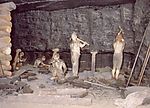
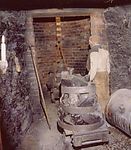
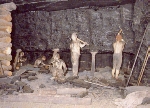
The underground mine display shows, in a safe environment, how coal was mined over a hundred years ago and what conditions underground were like. The mine trip is a walking tour with a Museum guide that lasts for twenty minutes.
The titled cottage, known as 'Jerushah', is an example of a building that has suffered subsidence due to mining beneath.
Rollover the captions in the box to see the available images in thumbnail format, click the caption to see the full-size image
| Reference: | 508 |
| Keywords: | Coal Thick Seam Staffordshire Material Susidence MCOL BCLM |
| Archive Ref: | Guide Book 2001 |
| Updated: | 11/9/2001 13:46:35 |