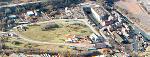
The village at the Museum is designed to show how a town would have developed around the work places. Most of the houses were built for the workers at the lime kilns and the ironworks. In the towns a lot of houses had to be fitted into a limited space so they were built in rows, or even back to back. Compare these with the cottages with gardens in the rural part of the site. As the towns developed the roads improved, footpaths were paved and gas lighting was provided. The street furniture, such as the letter box, man hole covers, drains and lampposts are an indication of the services that were provided to the growing towns.
In the industrial towns everything the people needed was close at hand: the corner shop at the end of the street, the chapel for worship, Sunday School and charity in times of need, the public house that provided an escape for the men from the overcrowded houses, and the school, where young children could play safely in the streets. The Museum buildings show all the activities that took place within them, such as shopping, bread making, or attending school, were carried out in the past.
| Reference: | 510 |
| Keywords: | Village Houses Roads Footpaths Overcrowded School Community 2000C BCLM |
| Archive Ref: | Marketing Photograph Collection |
| Updated: | 6/9/2001 11:36:59 |