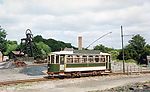
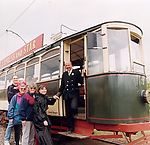
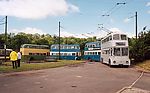
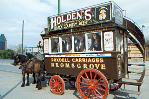
The industrial growth of the nineteenth century would not have been possible without the improvements in transport systems that also took place at that time. The major development was the railway network between 1830 and 1890. Although we have no railway at the Museum the process did not leave the site untouched; the embankment behind the colliery area is the line of the Dudley to Wolverhampton railway which was built in 1852. It was actually built across the Earl of Dudley's racecourse which used to be situated here.
A prominent feature of the Museum village is the canal, part of the Birmingham Canal Navigation network. The heyday of canals was in the early years of the nineteenth century, they later lost much of their long distance trade to the railways. However, the canals continued in use as a means of transporting goods over short distances, including the journey from the works to the railway station. Many industries, like our ironworks and the lime kilns, were already situated next to the canals and so carried on using this means of transport.
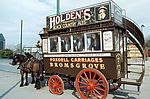
The new railways were also dependent upon horse drawn transport as a means of taking goods to and from stations. The horse and cart was a very important mode of transport in the Victorian period. The local carter would deliver goods around the town and to the outlying areas. The most common mode of transport for people was still by foot; adults and children alike walked to the shops, school, work and chapel, a Victorian experience that the Museum is still able to offer.
Rollover the captions in the box to see the available images in thumbnail format, click the caption to see the full-size image
| Reference: | 511 |
| Keywords: | Railway 1852 Station Colliery Canals Cart Horse Tram Bus BCLM |
| Archive Ref: | Marketing Photograph Collection |
| Updated: | 17/8/2001 11:36:03 |